In development
Kubb: Throwing Wood
A game of Kubb for the Playdate. The crank is the throwing arm.
What it is
Kubb is a lawn game played with wooden blocks. Each side throws batons at the other side’s kubbs, the kubbs knocked down are tossed back into play, and the side that clears every kubb and then topples the king wins.
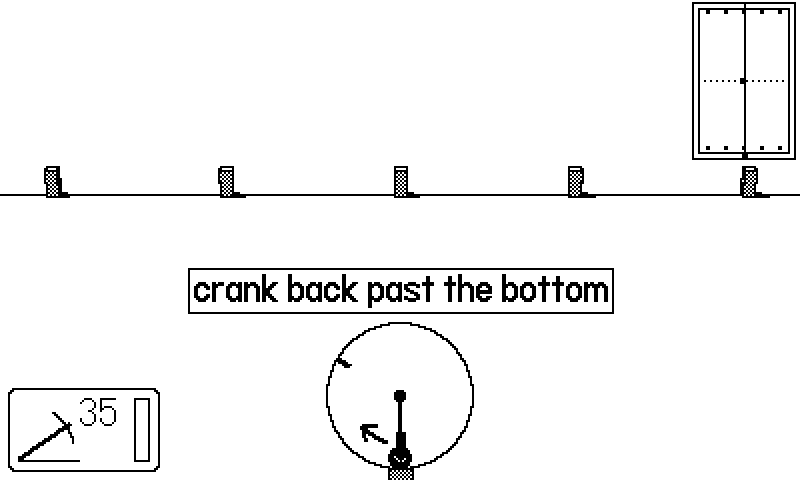
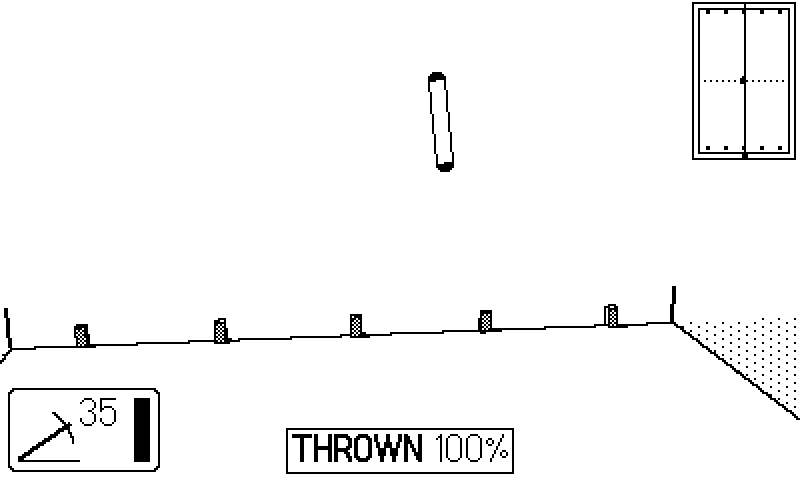
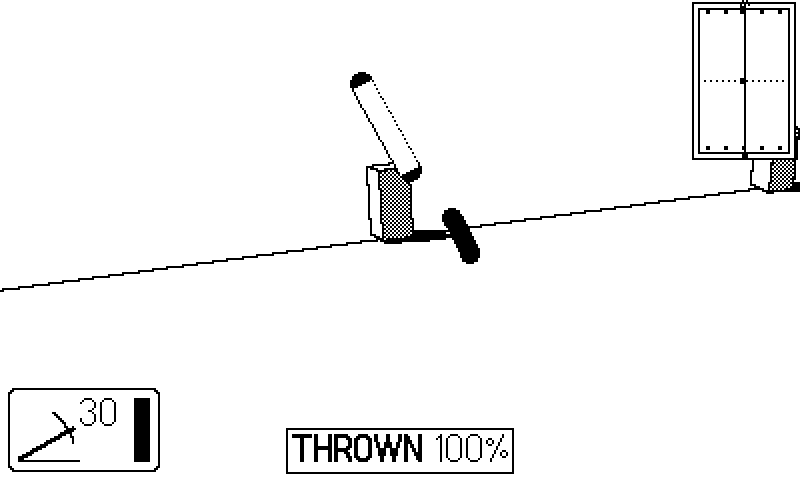
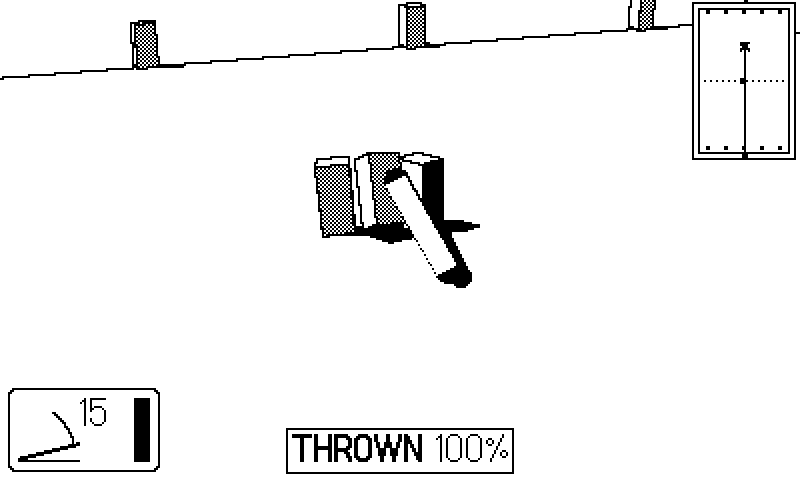
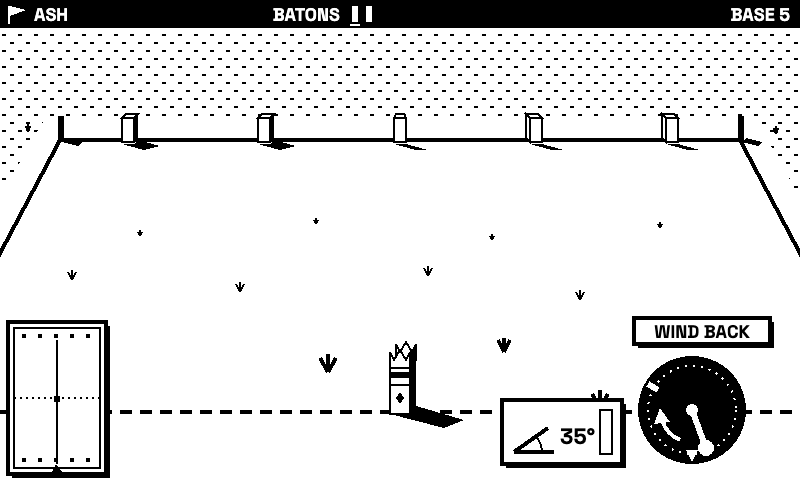
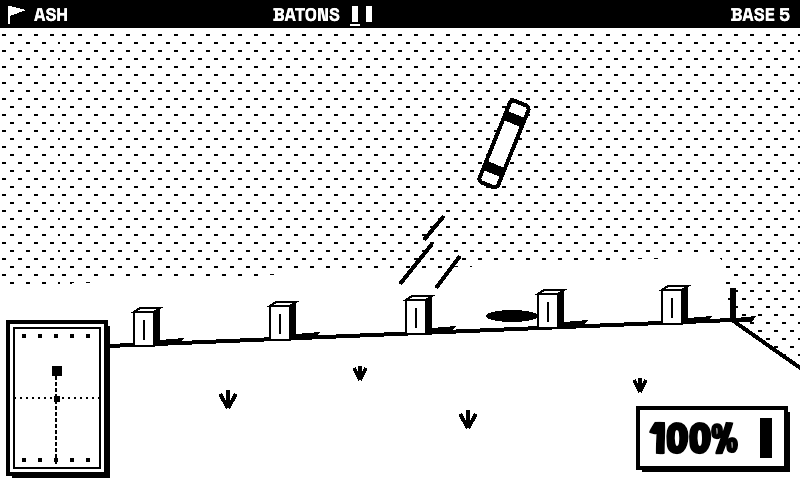
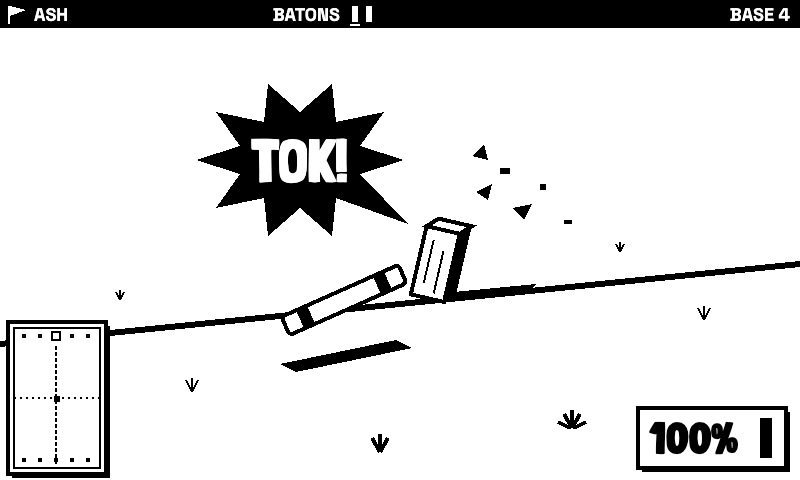
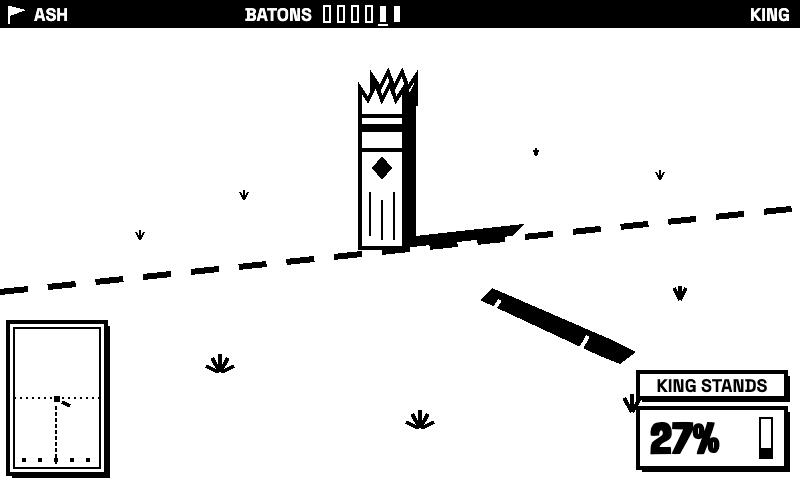
Throwing Wood plays it on the Playdate’s 400 by 240 pixel black-and-white screen. The pitch is five meters by eight, drawn from behind the thrower. Batons, kubbs and the king are solid bodies in a physics simulation at their real sizes, so what falls is worked out, not chosen: a baton can tumble, skid, glance off a stake or knock one kubb into the next. A baton thrown side-on spins like a helicopter, and it does not count.
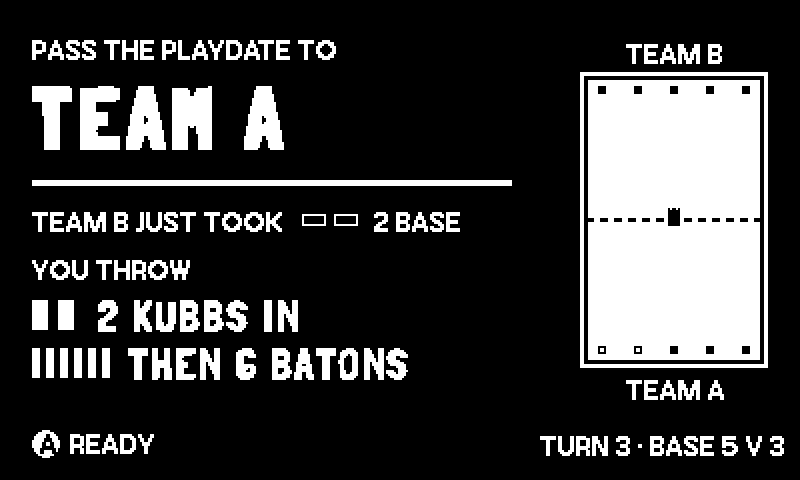
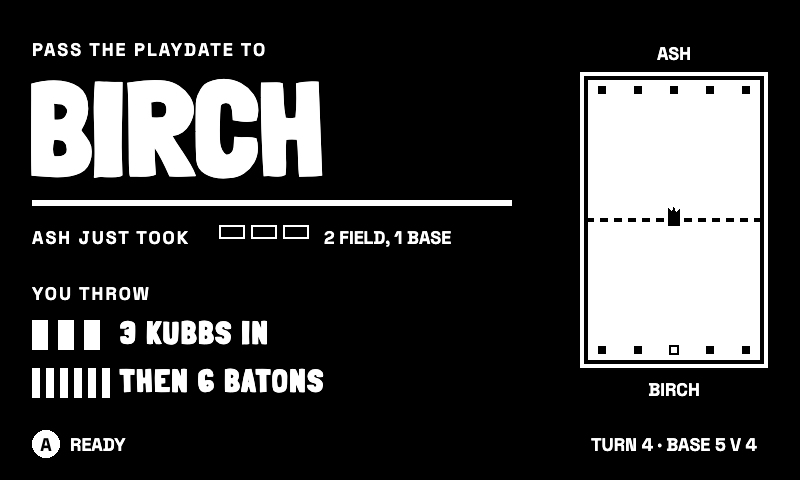
A match is two teams passing one Playdate, played to the U.S. National Kubb Championship rules with a 2-4-6 opening. Each finished match is written as a game file in Planet Kubb Notation.
Where it stands
Started November 13, 2026 and in development. It is not released, there is no download, and there is no release date.
Playable now
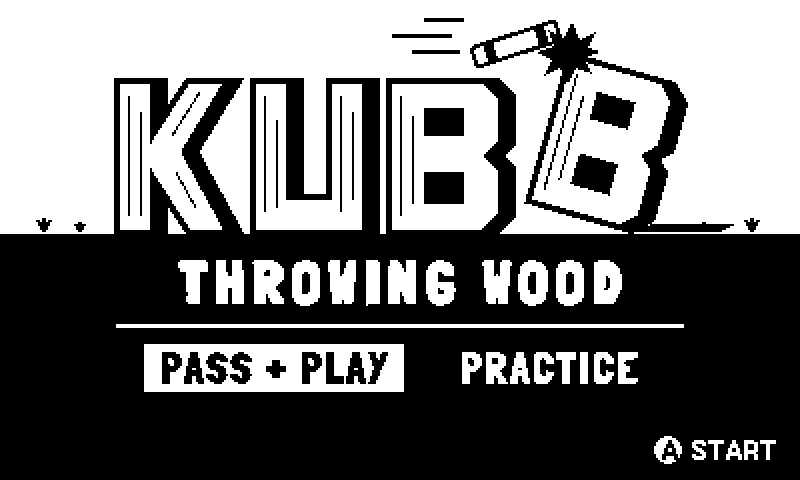
- Pass and play: a whole match for two teams on one Playdate.
- Practice: a pitch to throw on, with no match around it.
Not built yet
- A computer opponent.
- Sound.
- A screen for looking back at saved games.
Throwing with the crank
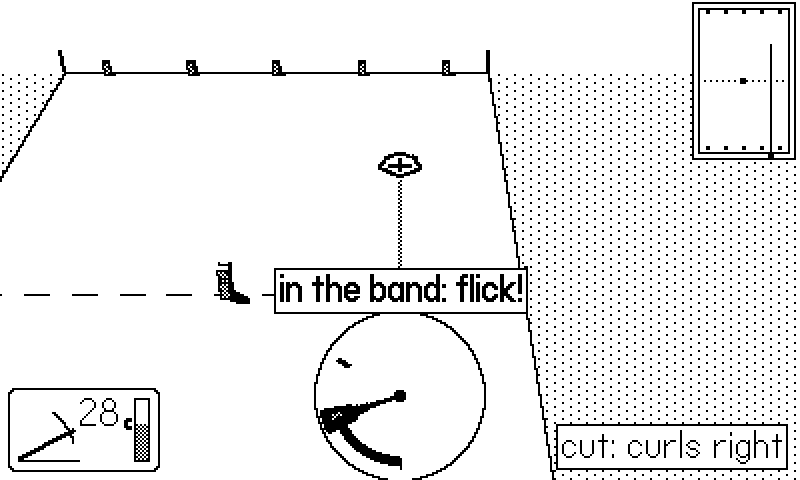
Turn the crank back past the bottom of its turn to wind up. The longer the backswing, the more power, up to a full-power mark on the dial. Then flick it forward to throw; how hard and how smoothly the crank turns sets the throw. Turned forward slowly, the crank lets the wind-up down without a throw.
| D-pad left and right | Walk along the throwing line |
|---|---|
| Hold B, turn the crank | Turn left or right to aim |
| Hold A, turn the crank | Set the loft, higher or lower |
| Crank back, then flick | Wind up and throw |
Screens
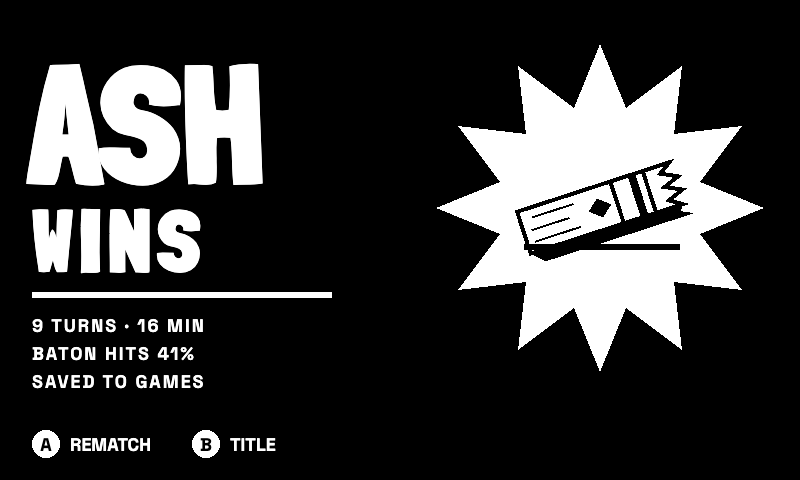
Captured from the game in the Playdate Simulator on November 13, 2026, at twice the Playdate’s size.
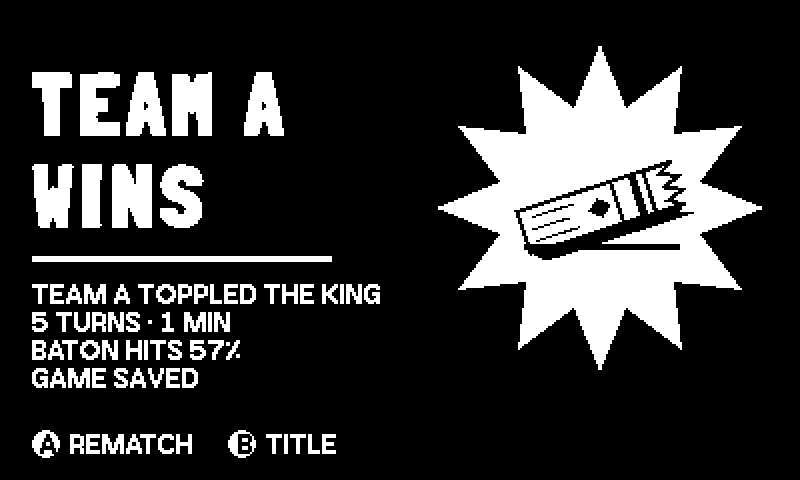
The look: Woodcut
A design session on November 13, 2026 settled the look: three tones, hard shadows and a white pitch. White is wood still standing, grey is wood that is down, and black is outline, shadow and anything spent. These are design boards, not screenshots, and parts of them are not in the game yet.
How it is being built
Jamie began it on November 13, 2026. Claude writes the code, in Lua with the Playdate SDK, and Jamie plays each build on his own Playdate and says what is wrong with it.
The physics, the rules and the notation are plain Lua with tests that run on a computer. Scripted runs in the Playdate Simulator wind up and throw on their own and save frames along the way; the screens above come from those runs. Every game file the tests produce has to pass the Planet Kubb Notation parser.
The fuller record, with more screens, the design brief and the first match played on a Playdate, is on Things I’ve built.